
A
Come with us to 21st century Seville and Morocco and experience what was once one of the most important kingdoms in Europe, Al Andalus, with architecture out of the Arabian Nights.
At its height, Al Andalus included most of southern Spain and Portugal with all present-day Morocco spilling into neighbouring countries. While the Caliphate of Cordoba was the capital of the Moorish Empire, Seville was the administrative see. In 1035 AD, Cordoba fell to one of the Christian kings and smaller independent Moorish kingdoms arose all over Andalucia. This fragmentation gave way to the beginning of the “Reconquista” or Reconquest, which took over two centuries to complete and for which the Spanish are still immensely proud.
T
We are five friends – in Seville for Holy Week.
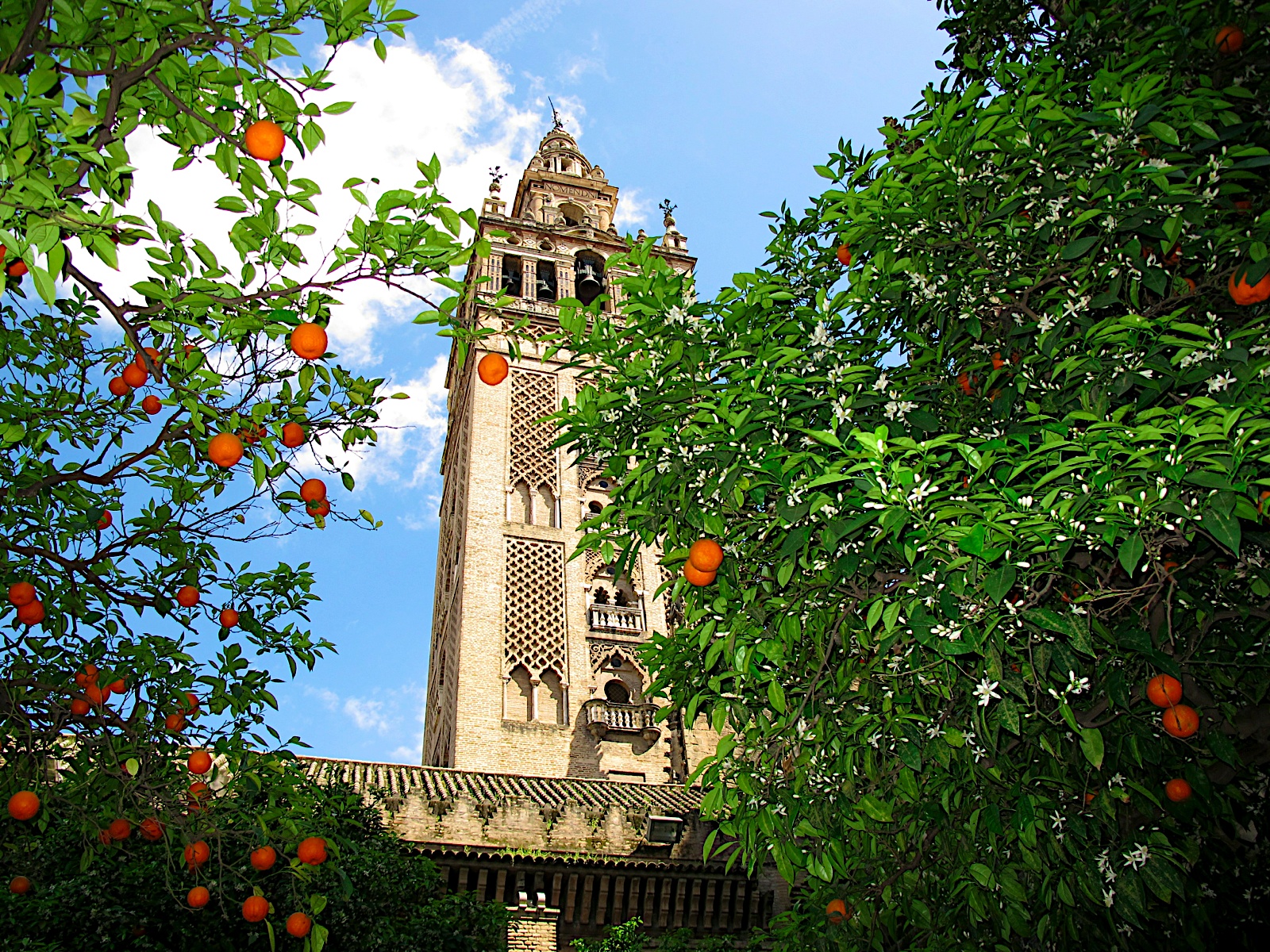
We have two adjoining apartments in a lovely older building in the tranquil Plaza Santa Cruz area – both look out over a patio of orange and avocado trees, so welcome after our harried arrivals. And the trees are in full blossom.
Edmundo sits with his morning cup of tea talking of his idea of Seville “The city is a like coquettish lady who reveals herself one step at a time. First, the outside – when one walks from beautiful small plazas into gardens bursting with colour, and then its most intimate part which we can call the soul of Seville, it’s shaded patios with the sound of water all very Moorish, Christian, very Andalucian, and what one would think to be very Spanish. This is a romantic city. This is where Queen Isabella disposed of her last jewels to Finance Christopher Columbus’ dream to discover the New World. She expels the Moors and Jews; unifies Spain and creates an Empire”, he says.
We all need some ‘down-time’ in the overall busy scheme of things during the week but we enjoy coming together at cocktail time for a glass of rioja and home-made tapas before venturing out for the evening meal. Patrick likes to take his book to the park. Edmundo relishes some extra siesta. Greg is happy standing at a neighbourhood bar engaging with whomever. Michael is writing, or pulling his hair out in frustration with his new Apple computer in between ‘keeping house’. And Jay even takes his iPod out of his ears and his head out of his computer to join in the conviviality.
Click here to view Seville Photo Memories
We are busy participating in the Holy Week observances in churches and joining the crowds to watch the processions of floats through the winding narrow streets and grand Plazas of this Andalucian city of Moorish and Roman influences.
Pious devotion will be turned into a spectacle of light and colour — the penitents in their black hoods; the clergy in violet, purple and red; and thousands of candles on the floats with images of Christ and the Blessed Virgin carried aloft through the narrow streets. We have reserved seats to watch the processions and to attend the observances in the Cathedral on Holy Thursday and Easter Sunday.
(Excerpt from my blog post of Easter 2010.)
H
It could be Spring Race Carnival at Randwick – happy crowds out strolling in the sunshine in their ‘Sunday Best’, gaily socialising, drinking on the sidewalk, and sitting in outdoor cafes. The men are smartly ‘got-up’ in their suits and ties but the Sevillano difference for the ladies is the black suit with black lace mantilla and high-heeled shoes. The incongruity of seeing the likes of elegant young women with a cigarette between black begloved fingers and a beer in the other hand will stay with me forever.
Gaiety is replaced by a sense of sobriety combined with excitement as we enter the massive cathedral to participate in the observance of the ‘Last Supper’. Not only are we attending Easter observances, we are seated in the front rows of the world’s largest Gothic Cathedral here in Seville observing ancient rites in ancient and beautiful surroundings where for centuries, artists and artisans have given the best of themselves for the glory of God.
Video – Good Friday
T
A number of people (sometimes barefoot) are dressed in a habit with the distinctive pointed hood and holding long wax candles (only lit by night), march in silence. These are the nazarenos. A procession can be made up from a few hundred to near 3,000 nazarenos and last anywhere from 4 to 14 hours, depending how far the home church is from the Cathedral.
At the center of each procession are the pasos, an image or set of images set atop a movable float of wood. If a brotherhood has three pasos, the first one is a sculpted scene of the Passion, or an allegorical scene, known as a misterio (mystery); the second is an image of Christ; and the third an image of the suffering Blessed Virgin Mary, known as a dolorosa.
The structure of the paso is richly carved and decorated with fabric, flowers and candles. Many of the structures carrying the image of Christ are gilded, and those carrying the image of the virgin often silver-plated.
A distinctive feature of Semana Santa in Seville is the style of marching of the pasos. A team of men, the costaleros (literally “sack men”, for their distinctive – and functional – headdress), supporting the beams upon their shoulders and necks, lift, move and lower the paso. As they are all inside the structure and hidden from the external view by a curtain, the paso seems to move by itself. On the outside an overseer (capataz), guides the team by voice, and/or through a ceremonial hammer el llamador (caller) attached to the paso.
Some processions are silent, with no musical accompaniment, some have a cappella choirs or wind quartets, but many (and especially those historically associated with poorer neighbourhoods) feature a drum and trumpet band behind the image of Christ and a brass band behind the virgin playing religious hymns or marchas from a standard repertoire Those associated with the images of Christ are often funeral in nature, whilst those associated with the Virgin are more celebratory.
(Excerpt from my blog post of Easter 2010.)
Video – Easter Sunday
N
Respect requires that we do not photograph during the Mass. This video shows the Procession into the Cathedral and Recessional at the completion.
At the Easter Vigil observance, we arrive in the church in darkness. The liturgy this evening leads us to the moment of the Resurrection. The lights return with bells ringing and the Archbishop leading the choir into an exultant Gloria in Excelsis Deo.
There are twenty co-celebrants on the altar with the Archbishop; in white vestments; all moving in different directions; all full of symbolism. Representatives of the Crown and Civic Dignitaries sit in special seats next to the Altar. Candles. Incense. Organ. Choir. Bells and Clackers. Grand!
F
Travelling with Michael – ماال, Jay – جيصون and Edmundo – ادمارو
Fez is a treasure – a jewel. The medina is unique, and life goes on much as it’s done for centuries. The architecture, patios and fountains; and elaborate, ornate tile work is very similar to homes and palaces we visited last week in Seville. Our visit to the Alcazar Palace in Seville was simply the best, and we had the added enjoyment of strolling through the beautifully maintained gardens in full spring bloom. Just as lights and incense highlight any visit to a cathedral, the colour and scents from a spring garden, simply bowl you over. However, Seville doesn’t provide the ‘sense of place’ and excitement of discovering the unknown that I feel in Fez.
Staying in an 18th century riad in the heart of the souk in the ancient city of Fez in Morocco blah blah blah – There are just two colours at Amanjena – pink and green; not counting the wonderful oranges that the hotel appears to have ‘hung’ from the trees for me in my courtyard.

C
One Response to Holy Week ‘Semana Santa’ in Seville 2010